If you’ve ever worked with custom functional PVC film for applications like medical device components, automotive interior layers, or industrial sealing solutions, you know that the final product’s performance isn’t just about the raw plastic pellets or the right color additive. For a supplier like mine—one that builds custom functional PVC films tailored to unique client needs, not off-the-shelf rolls—quality control (QC) is the backbone of every order, from the first design sketch to the day the film ships to the client’s facility. Early in my time running this business, I learned the hard way that cutting corners on QC doesn’t just lead to wasted material or delayed shipments; it can derail a client’s entire production line, especially if their film is critical to a safety- regulated product. That’s why QC isn’t a single step for us—it’s a cross-team process that happens at every stage, and it’s led by the people who actually run our extruders, mixers, and testing labs, not just a distant quality manager. Custom Functional PVC Film
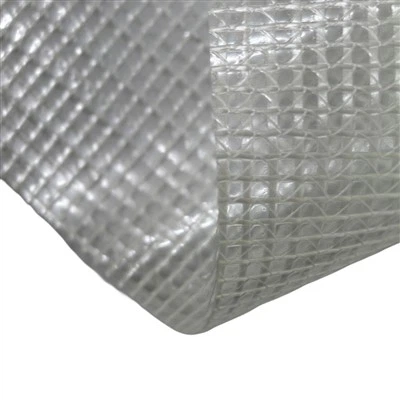
Let’s start at the very beginning, because bad QC starts long before we melt any PVC. Our first QC checkpoint is raw material receipt, and it’s non-negotiable. Unlike generic PVC film suppliers, we source custom formulations for each client: some need PVC with low phthalate content for pediatric medical use, others need film with high UV resistance for outdoor agricultural covers, and some need anti-static film for electronic component packaging. For every incoming batch of PVC resin, plasticizers, stabilizers, and any functional additives (like UV inhibitors or flame retardants), our team pulls three random samples from the pallet, marks them with the batch number, and sends them directly to our in-house analytical lab. We test for purity first—running gas chromatography-mass spectrometry (GC-MS) to confirm there are no unexpected contaminants, like residual heavy metals or unapproved plasticizers that could violate FDA or EU REACH regulations. If a resin batch fails even one purity test, we send the entire pallet back immediately, no arguments. We also test for viscosity, which determines how the material will flow through our extruders; if the viscosity is off, the film will be too thin in some spots or too brittle in others, so we reject batches that don’t meet our exact specification. Last year, we had a resin supplier send a batch of PVC that had a 12% higher plasticizer content than quoted; our raw material QC caught it before it hit our mixer, saving us from 500 pounds of wasted material and a potential order delay.
Once we have approved raw materials, the next stage is formulation mixing, and here we have another layer of QC. We don’t just dump all the ingredients into a single mixer and hope for the best; every client’s custom formulation is prepared in a small, dedicated test batch first, not a full production run. For every test batch, we measure every additive to within 0.1% accuracy—using calibrated digital scales that we verify monthly against national metrology standards—because even a tiny overage of a flame retardant, for example, could make the film too rigid or leave a sticky residue on the client’s product. After mixing, we run a quick visual check to make sure there are no lumps or unevenly distributed additives, then a more precise test: melt flow index (MFI) testing, which tells us how the formulation will perform during extrusion. If the test batch’s MFI falls outside our target range, we adjust the mixing time or speed and re-test until it’s perfect. Only then do we move to full production mixing for the client’s order. This step is especially important for clients making medical grade film, where even a single clump of unblended additive could create a weak spot that leads to a medical device failure.
Now, the part that most clients care about: extrusion and on-line QC, which happens while the film is being made, not after it’s a finished roll. Our extruders are equipped with real-time monitoring systems that track 12 different variables every 0.5 seconds: temperature at three points along the extruder barrel, film thickness across the entire width of the roll, line speed, and even the level of additives being fed into the mix. We’ve had clients ask us why we invest in these systems when manual thickness checks would work, but here’s the thing: manual checks only sample a few spots, but a 500-foot roll of film can have a thin spot at the very end that would get missed. Our on-line thickness gauge, which uses infrared technology, measures thickness every inch across the 60-inch width of the film and alerts our operators instantly if the thickness deviates more than 0.001 inches from the client’s specification. If that alert goes off, the operator can adjust the extruder’s screw speed or temperature in real time, so we don’t waste a whole roll of film. Last quarter, we had a client with automotive interior film that required a thickness of 0.020 inches ± 0.002 inches; our on-line system caught a temperature fluctuation at the 100-foot mark, adjusted it, and we only scrapped the first 20 feet instead of the full 500-foot run, saving the client $1,200 in material costs and keeping their order on schedule. We also do a secondary manual thickness check every hour, pulling three 6-inch samples from different parts of the roll, to confirm the on-line gauge is calibrated correctly—calibration checks happen every two hours, too, using precision measuring tools that are certified annually by an external ISO-accredited lab.
After extrusion, the film goes through a secondary processing step if the client needs additional functions: maybe a textured surface for better grip, a heat-sealable layer for packaging, or a printed design with custom branding. That’s where another set of QC checks comes in, tailored specifically to the secondary process. For example, if a client needs heat-sealable PVC film for food packaging, we test the seal strength by cutting 1-inch wide strips of the film, sealing them at different temperatures, and measuring how much force is needed to pull the seal apart. We have to hit a minimum seal strength of 15 pounds per inch for food packaging, and we document every test result for the client, so they can prove their packaging meets food safety standards. For textured film, we use a 3D surface profiler to measure the texture depth and consistency, because uneven texture can make a product look cheap or affect its function—like a grip layer on a medical handle that should be smooth enough to not irritate skin but textured enough to not slip. We also test for adhesion between layers if the film is co-extruded (like a three-layer film with a core of flame retardant material and outer layers of PVC for durability); we do a peel test to make sure the layers don’t separate when the client processes the film.
Once the film is slit into the exact width the client requested and rolled onto cores, it goes to our final QC lab before shipping. This is where we run a full suite of performance tests, specific to each client’s application, because a film for outdoor playground equipment needs different properties than one for a IV bag. For UV-resistant film (used in playground surfaces or outdoor awnings), we run accelerated weathering tests in a Q-Sun chamber, exposing samples to 1,000 hours of simulated sunlight and temperature changes, then testing for color fading, brittleness, and tensile strength. For anti-static film, we test surface resistivity to make sure it’s between 10^8 and 10^12 ohms, the range that prevents static build-up without being too conductive. For medical grade film, we test for extractables, using a solvent that mimics bodily fluids, to make sure no harmful chemicals leach out—this is a requirement for FDA 510(k) clearance, so our test results are kept on file for at least 10 years, in case the client needs them for audits. We also do a visual inspection of every finished roll, with our team checking for scratches, bubbles, or uneven edges under bright LED lights; any roll with a defect that falls outside the client’s specs is rejected and reprocessed or scrapped, no exceptions.
I know what some buyers might be thinking: all this QC must make your prices way higher than generic suppliers. But here’s the thing: the costs of bad QC—delayed shipments, rejections, product failures, liability—are far higher than the cost of our rigorous processes. Last year, a small client of ours tried a cheaper generic PVC film for their custom packaging line, and the film’s anti-static properties failed during a critical production run, causing $20,000 in lost parts and a three-day delay for their own client. They switched to us that week, and now they’ve been a repeat customer for two years. Our QC processes not only protect our reputation, but they also give our clients peace of mind—they don’t have to worry about last-minute failures, because every roll of film we send has passed every test.
Of course, we don’t stop at our internal QC. We also work with third-party accredited labs for annual audits and validation, especially for clients in regulated industries like medical or aerospace. Our ISO 9001 certification means our QC processes are audited every six months, and we’re required to document every single test result, adjustment, and rejection. We also solicit feedback from our clients after every order, so we can adjust our QC steps if something isn’t working for their specific needs. For example, one client making custom PVC film for window blinds asked us to add more frequent thickness checks for narrow rolls, since they process the film on smaller machinery; we adjusted our on-line gauge to take a thickness reading every 0.25 inches for narrow rolls, and that small change eliminated 90% of their processing issues.

At the end of the day, quality control for custom functional PVC film isn’t a box we check to get a certification—it’s a promise we make to every client: that their film will perform exactly as they need it, on time, every time. If you’re working on a project that needs custom PVC film, whether it’s a medical component, an automotive part, or an industrial product, and you want a supplier that prioritizes rigorous, transparent QC from raw material to finished roll, we’re here to talk. We can walk you through our QC processes, share our test results, and tailor a solution that meets your exact specifications. Whether you have a small prototype order or a large production run, we’re ready to work with you.
PVC Tarpaulin References
ASTM D882 – Standard Test Method for Tensile Properties of Thin Plastic Sheeting
ISO 9001:2015 – Quality management systems — Requirements
FDA 21 CFR Part 177.1520 – Food additives permitted for use in polymeric materials
REACH Regulation (EC) No 1907/2006 – Registration, Evaluation, Authorization and Restriction of Chemicals
ASTM D4329 – Standard Practice for Fluorescent UV Exposure of Plastics
Nantong Dahe Composite New Material Technology Co., Ltd.
Address: South Side of Pinghai Highway, Pinghe Village, Dongshe Town, Tongzhou District, Nantong City, Jiangsu Province, China
E-mail: nantongdahe@outlook.com
WebSite: https://www.cndahetech.com/
