Let’s cut to the chase: if you’ve ever leaned into your car’s windshield during a twisty mountain road, or stared wide-eyed at a video that makes you feel like you’re zipping through a pine tree forest at 60 miles an inch, you’ve basically experienced the core of an FPV drone. I’m a second-generation FPV drone supplier, and I get that a lot of folks first hear the term FPV and just see three letters they can’t place—so let’s break it down like I’d explain it to a kid who’s never held a controller, no jargon, no fluff. FPV Drones
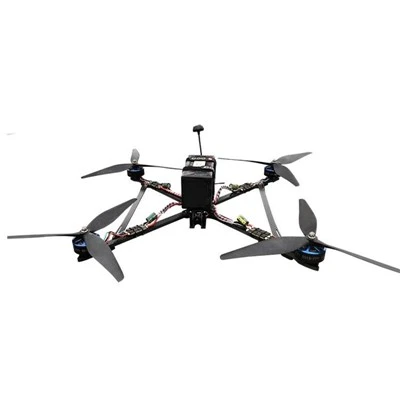
First, FPV stands for First-Person View. That’s not just a marketing buzzword—it’s exactly what it sounds like: instead of watching the drone from the ground, you wear a pair of goggles that feed live video from a tiny camera mounted right on its nose. It’s like being the drone. You lean left, the drone leans left. You twist your wrist, the drone yaws right. There’s no screen lag (well, almost none, if you pick the right gear) and no middleman between you and whatever you’re flying toward. For a lot of people, that’s the magic of FPV drones: it’s not just flying a remote-controlled gadget—it’s being in a 3D, immersive world that most people will never get to see, unless they’re standing right under that pine tree or hovering a foot above a snow-capped alpine lake.
But here’s where it gets different from the camera drones you see at your local big-box store, the ones people use to shoot wedding videos or family vacations. Those are usually “selfie-style” or “follow-me” drones, built for stability and easy, slow flight. FPV drones? They’re built for speed. We’re talking 50 to 90 miles an hour, sometimes even faster for racers. They’re light, agile, with tiny, high-torque motors, carbon fiber frames, and propellers that don’t just spin—they bite through air. If a regular camera drone feels like cruising in a minivan, an FPV drone feels like driving a Formula 1 car: sharp, responsive, made to move.
Now, let’s talk about the parts that make an FPV drone work, because that’s what a lot of first-time buyers ask me when they reach out. The camera is tiny, usually 2 grams to 10 grams, mounted on a servo that lets it tilt up or down (you don’t have to pilot upside down to point the camera at the ground if you don’t want to). It sends a 1080p or 720p video signal to your goggles, usually on a 5.8GHz frequency—there’s no Wi-Fi here, this is a dedicated, low-latency signal so you don’t miss a split-second turn. The goggles are just a small screen strapped to your face, with lenses that warp the view to match human vision, so it feels like your eyes are on the drone. The controller isn’t a simple toy remote, either: it’s got hall-effect joysticks that give you precise control, and some come with screens so you can see what the drone sees if your goggles break. Even the battery is different: FPV drones run on high-discharge lithium-polymer (LiPo) batteries that only last 2 to 8 minutes, depending on how hard you fly—so it’s not a device you can take on a two-hour flight; it’s a quick, adrenaline-fueled ride.
I get why some people get confused about FPV vs. other drones, too. A few years back, FPV was just a hobbyist thing, built by tinkerers in their garages. Guys would buy parts, solder them together, spend weeks testing, and then show up at local race fields to buzz through gates like it was a NASCAR track. But over the last five years, it’s exploded. Now you’ve got beginner FPV drones you can take out of the box and fly within 10 minutes, mid-tier ones for people who want to step up, and pro-level ones for filmmakers or racers who need every ounce of speed and precision. That’s why our company started: too many suppliers were selling cheap, flimsy FPV drones that break on the first crash (and let’s be real, crashes happen—everyone crashes when they’re learning), or overpriced rigs that cost more than a used car. We source parts from the same manufacturers the hobbyists trust, test every drone before it leaves our warehouse, and price them so someone who just wants to try FPV doesn’t have to take out a second mortgage.
Let’s talk about the uses, because FPV isn’t just for racers anymore. Filmmakers love it: a regular drone can get a shot of a mountain range, but an FPV drone can zip through a narrow canyon, hover next to a cliff face, or fly through a busy city street without shutting down traffic. Search and rescue teams use FPV drones too—they’re small enough to fit through a broken window, fast enough to cover a large forest in minutes, and the live view lets rescuers spot hikers or missing people that a ground search would miss. Hobbyists do everything from flying through abandoned amusement parks to racing in parking lots, even backyard courses with gates made of pool noodles. I’ve even seen guys build FPV drones to fly through their own neighborhoods at night, just for the thrill.
Now, the big question for anyone new to this: is FPV hard to learn? It’s not like flying a regular drone, that’s for sure. When you first start, your brain has to rewire itself. You’re not just looking at a screen from above—you’re looking out the drone’s “eyes,” so if the drone turns left, you feel like you’re turning left, but your body is standing still. It can make you dizzy at first, but that goes away after a few flights. Most beginners start with a “whoop” drone: tiny, propellers inside a small frame, so crashes don’t hurt much, and you can fly indoors without smashing into furniture. We’ve found that beginners who start with a ready-to-fly (RTF) whoop get the hang of it in a weekend, whereas back when I was learning, I spent three days crashing a custom-built drone into my garage ceiling. That’s why we prioritize RTF options for new buyers—no soldering, no assembly, just unbox, charge, and fly.
But if you’re a more experienced flyer, there’s always room to grow. Race drones have features like low-latency video, GPS return-to-home, and even digital FPV, which is a newer technology that uses a digital signal instead of analog, so the video is clearer and doesn’t get interrupted by interference. We stock both analog and digital rigs, because some racers swear by analog for the speed, and some filmmakers love digital for the crisp video. It’s all about what you want to do with the drone.
One thing I always tell people: FPV isn’t just a hobby, it’s a community. When you go to a local FPV race, you’ll see guys helping each other fix their drones after a crash, trading parts, sharing tips. Our company isn’t just here to sell drones—we host local meetups, give free workshops for beginners, and even sponsor a small local racing team. A few years back, a teenager who bought his first whoop from us went on to win a regional FPV race, and he came back to tell us how the beginner kit we sold him made it possible. That’s the stuff that keeps us going, not just the sales numbers.
Now, if you’re reading this and you’re thinking, “I want to get into FPV, but I don’t know where to start,” or you’re a club owner or filmmaker looking to restock FPV drones, parts, or gear, we can help. We work with beginners who need their first rig, with small businesses that need commercial FPV drones for inspections or filming, and with racing teams that need high-performance parts. Whether you’re flying for fun, for work, or for competition, we have options that fit every budget and skill level. We test every product we sell, so you don’t have to worry about getting a drone that’ll break after one flight. If you have questions, our team of FPV enthusiasts (not just salespeople) is here to walk you through every step. Reach out to us to talk about what you need, and we’ll put together a custom solution for you.

Let’s make one thing clear: FPV isn’t a toy. It’s a tool, a way to experience the world from a perspective no human has naturally. Whether you’re zipping through a forest at 60 mph, filming a wedding from a vantage point no one else can get, or helping search teams find someone lost, an FPV drone is more than just a gadget—it’s a gateway to something new. We’re here to make sure you get the right one for you, no gimmicks, no overpriced gear, just good FPV drones built for people who love to fly.
5 Inch Drone Frame References
- National Aeronautics and Space Administration. (2022). Small Unmanned Aerial Systems for Environmental Monitoring. NASA Office of STEM Engagement.
- International Drone Racing Association. (2023). FPV Drone Design and Performance Standards. IDRA Annual Technical Report.
- Federal Aviation Administration. (2021). Remote Identification Requirements for Unmanned Aircraft Systems. FAA UAS Regulation Series.
- Consumer Technology Association. (2022). Unmanned Aerial Systems Market Report: FPV Drone Segment. CTA Industry Analytics.
- Society of Photo-Optical Instrumentation Engineers. (2020). Low-Latency Video Transmission for First-Person View Drones. SPIE Journal of Electronic Imaging.
Xpert Intelligent Equipment Co., Ltd.
Xpert Intelligent Equipment Co., Ltd. is one of the most experienced FPV drone manufacturers and suppliers in China, also supports customized service. Please feel free to wholesale bulk discount FPV drone in stock here from our factory. Quality products and reasonable price are available.
Address: Building 3, No. 65 Longhu Road, Longdong Community, Baolong Street, Longgang District, Shenzhen
E-mail: winnie@xpfpv.com
WebSite: https://www.xpfpv.com/
