Hey there, folks! As a supplier of forged valves, I often get asked about all sorts of technical stuff related to these bad boys. One of the most common questions I’ve come across is, "What the heck are the opening and closing torques of a forged valve?" Well, you’re in luck because I’m gonna break it down for you in plain English. Forged Valve

Let’s start with the basics. A forged valve is a type of valve that’s made through the forging process. This means that a solid piece of metal is heated up and then shaped using compressive forces. The result is a valve that’s super strong and durable, making it perfect for all sorts of applications, from oil and gas to water treatment.
Now, onto the main event: opening and closing torques. Simply put, the opening torque is the amount of force you need to apply to open the valve, and the closing torque is the force needed to shut it down. These torques are crucial because they determine how easy or difficult it is to operate the valve.
Why do we care about these torques? Well, if the opening torque is too high, it can be a real pain in the neck to open the valve. You might need to use a big wrench or some other tool, and it could even require multiple people to get the job done. On the other hand, if the closing torque is too low, the valve might not seal properly, which can lead to leaks and all sorts of other problems.
So, what factors affect the opening and closing torques of a forged valve? There are actually quite a few, and I’ll go through the main ones.
First up is the valve size. Generally speaking, the bigger the valve, the higher the opening and closing torques. This is because there’s more surface area that needs to be moved, and more force is required to overcome the friction. For example, a small forged valve used in a residential plumbing system might have relatively low torques, while a massive valve used in an industrial pipeline could require a whole lot of muscle to operate.
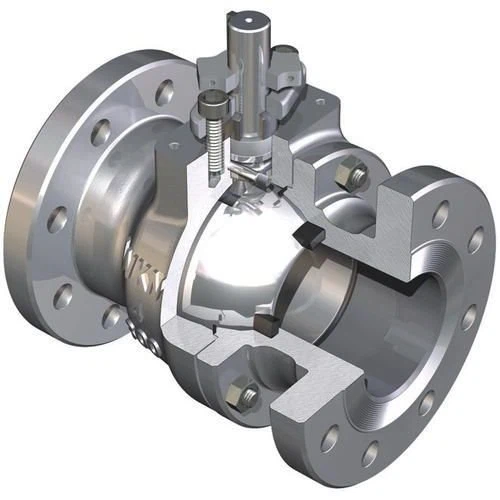
The type of valve also plays a huge role. There are different types of forged valves, like gate valves, globe valves, and ball valves, and each one has its own unique torque requirements. Gate valves, for instance, are designed to be fully open or fully closed. They usually have a higher opening torque because you need to lift a large gate out of the way. Globe valves, on the other hand, are used for regulating flow, and their torques are often lower because they don’t need to move as much mass. Ball valves are another popular option, and they tend to have relatively low opening and closing torques because the ball inside just needs to rotate.
The material of the valve is another important factor. Forged valves can be made from various metals, such as stainless steel, carbon steel, and alloy steel. Different materials have different levels of friction and hardness, which can affect the torques. For example, a valve made from a softer metal might have lower torques because it’s easier to move parts around, but it might not be as durable as a valve made from a harder metal.
The fluid or gas that the valve is handling also makes a difference. If the valve is used for a high – pressure or high – viscosity fluid, the torques will be higher. High – pressure fluids exert more force on the valve components, and high – viscosity fluids create more resistance when the valve is being opened or closed. For instance, a valve used in an oil pipeline will likely have higher torques compared to a valve used in a low – pressure water system.
Now, how do we measure these torques? Well, there are special tools called torque wrenches that are used for this purpose. These wrenches can accurately measure the amount of force being applied. When a valve is being manufactured, the engineers will test it using these torque wrenches to make sure the opening and closing torques are within the acceptable range.
As a forged valve supplier, I always make sure that the valves we offer have the right opening and closing torques. We’ve got a team of experts who know their stuff inside out. They carefully select the materials, design the valves, and test them rigorously to ensure that they meet the highest standards.
We understand that different customers have different needs. Some might need valves with low torques for easy operation, while others might require valves that can handle high – pressure applications, even if it means higher torques. That’s why we offer a wide range of forged valves to suit all sorts of requirements.
If you’re in the market for a forged valve, it’s really important to consider the opening and closing torques. You don’t want to end up with a valve that’s either too hard to operate or doesn’t seal properly. And that’s where we come in. We can help you choose the right valve for your specific application. Whether you’re a small business owner looking for a valve for your local plumbing project or a big industrial company in need of heavy – duty valves, we’ve got you covered.
We’re not just about selling valves. We’re about building long – term relationships with our customers. We provide top – notch customer service, and we’re always available to answer any questions you might have about the opening and closing torques or any other aspect of our forged valves.
So, if you’re interested in learning more about our forged valves or if you’re ready to start a procurement discussion, don’t hesitate to reach out. We’re here to make the process as smooth and easy as possible for you. Whether you need a single valve or a large order, we can work with you to get the best solution for your needs.
In conclusion, understanding the opening and closing torques of a forged valve is essential for anyone in the market for these products. It can help you make an informed decision and ensure that you get a valve that works well and lasts a long time. And as your trusted forged valve supplier, we’re here to guide you every step of the way.
Check Valve References:
- Valve Handbook by Robert W. McKetta
- Industrial Valves: Design, Selection, and Installation by William A. Nayfeh
Zhejiang Sunawei Valve Co., Ltd.
As one of the most professional forged valve manufacturers and suppliers in China, we offer a wide range of valves with superior quality. Please feel free to wholesale high quality forged valve at competitive price from our factory. We also accept customized orders.
Address: Anfeng Industrial, Oubei Town, Wenzhou City, Zhejiang, China
E-mail: snv@sunawevalve.com
WebSite: https://www.sunay-valves.com/
