If you’ve ever walked through a fabrication shop where welders finish a big steel structure—say, a heavy-duty crane boom, a pressure vessel for a food processing plant, or a massive pipe spool for an offshore energy project—you’ve probably seen them pause, wipe their forehead, and then crank up a different piece of equipment not immediately visible: a post-weld heat treatment (PWHT) unit connected to their welding machine. As a welding machine supplier who’s spent the last 12 years on shop floors across North America, Europe, and parts of Southeast Asia, I can’t tell you how many times I’ve had customers ask, “Wait, my welding machine does the melt and the join—why do I need all this extra stuff with the PWHT unit?” It’s a question that makes sense on the surface, but the answer is one that separates good welds from ones that fail when the heat and pressure of real-world use kick in. Let’s break down what post-weld heat treatment actually is, how it ties directly to the welding machines you’re already investing in, why it’s non-negotiable for most critical applications, and how partnering with the right supplier can make this part of your process seamless, not a hassle. Welding Machine
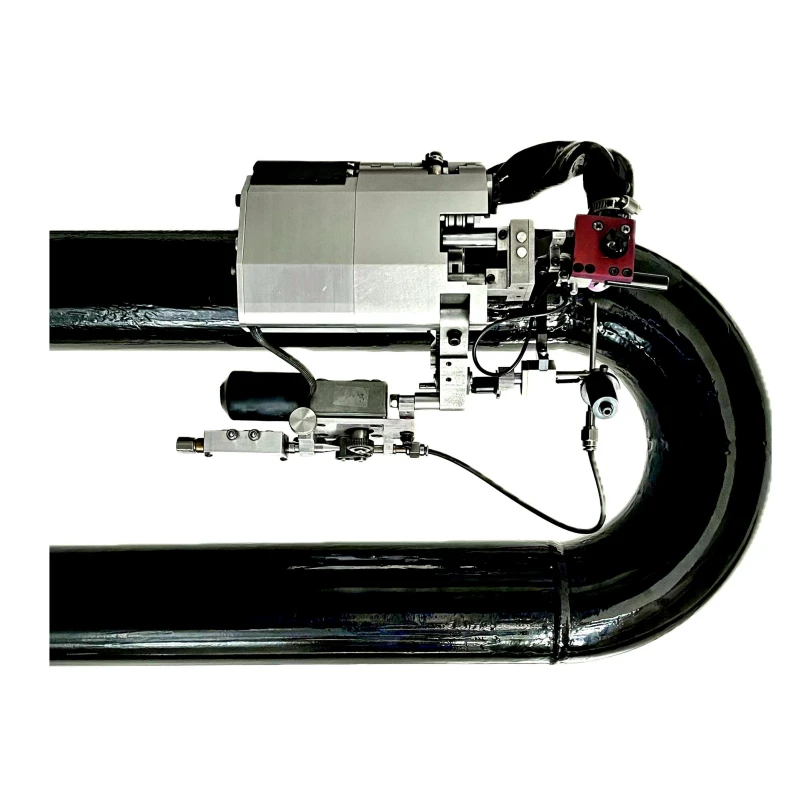
First, let’s ground this in what happens when you use a welding machine to make a weld. No matter if you’re working with a MIG welder for thin sheet metal, a TIG welder for precision aerospace parts, or a submerged arc welder for thick structural steel, the process boils down to three things: you heat a tiny, localized area of base metal to its melting point, add filler material to fill the gap, and then let that area cool rapidly as you move the gun away. That rapid cooling is where the problem starts. Steel, for example, transforms its molecular structure when heated past its critical temperature (around 1335°F for most carbon steels) and then cools fast. Instead of forming a tough, ductile structure that can bend and absorb stress, it forms martensite—a hard, brittle structure that’s prone to cracking, especially if there’s residual stress from the welding process still locked in. For low-alloy steels, high-strength steels, and all but the thinnest sections of carbon steel, that martensite and residual stress are ticking time bombs. A weld on a pressure vessel could crack under the pressure of a boiling fluid; a weld on a bridge girder could fail under repeated traffic loads; a weld on an oil pipeline could split, leading to costly spills or shutdowns. That’s where post-weld heat treatment comes in.
At its core, post-weld heat treatment is a controlled process where you take the entire welded component (or at least the heat-affected zone around the weld, which is the area of base metal that’s been altered by the welding machine’s heat) and heat it to a specific, lower temperature than the welding process, hold it there for a set amount of time, and then cool it at a slow, regulated rate. It’s not just cranking up a torch and warming the part—this is precise work, and your welding machine can’t do this on its own, which is why we supply PWHT units alongside our welding machines to create a complete solution. Let’s be clear: PWHT isn’t a one-size-fits-all step. The temperature, hold time, and cooling rate depend entirely on three factors: the type of base metal you used, the thickness of the parts you welded, and the application the component will be used for. For example, a 2-inch thick A572 grade 50 structural steel beam for a warehouse will need a different PWHT cycle than a ¼-inch thick 316L stainless steel manifold for a pharmaceutical mixing tank. The goal is always the same, though: reduce residual stress, soften brittle martensite, improve ductility, and restore corrosion resistance in the heat-affected zone that the welding machine’s heat threw off.
Now, let’s talk about the practical, day-to-day side of this—because I’ve seen too many shops try to skip or cut corners on PWHT, and the results are never good. Last year, I visited a small fabrication shop in Ohio that makes custom grain silos for local farms. They had a line of MIG welding machines from our line, and they were in a rush to fill a big order for 20 silos before harvest season. Their lead welder, a guy named Joe who’d been welding for 25 years, thought he could skip PWHT on the ½-inch thick steel gussets he was attaching to the silo frames. “The welds look good,” he told me when I pointed it out. “And this stuff cools fast enough on its own.” A week later, I got a panicked call from their owner: one of the silos had a crack running along a gusset weld during a pressure test, spraying water all over their shop and delaying the order by three weeks. The fix? They had to cut out all the bad welds, re-weld them, and run proper PWHT on every single gusset. That incident cost them more than the price of a new PWHT unit for their shop, not to mention the lost revenue. That’s the kind of mistake that comes from not understanding what PWHT actually does, and how it pairs with the performance of your welding machine. The welding machine gives you a strong weld, but without PWHT, that weld is at risk of failing when the silo is filled with 100 tons of grain and sitting outside in 30-degree Fahrenheit winter temperatures.
Another common misconception I hear: “PWHT is only for big, heavy parts like pressure vessels.” That’s not true either. Take stainless steel, for example. When you weld stainless with a TIG welding machine (which is super popular for food and medical equipment), the heat from the welding process can cause something called sensitization. That’s when chromium in the steel combines with carbon at the grain boundaries, leaving the area around the weld with less chromium—making it prone to corrosion, especially in acidic environments. For thin stainless parts, sensitization might not be a big deal, but for parts that will be used in a food processing plant where they’re washed with harsh chemicals, or a medical device that needs to withstand autoclaving, PWHT is non-negotiable. Even for aluminum, which is often thought of as “easy” to weld, thick sections can get residual stress that leads to distortion, making it hard to fit parts together later—PWHT fixes that, too.
Now, let’s get into the details of how PWHT works, because it’s not just heating a part. First, you have to calculate the correct temperature and hold time, which we help our customers with when they buy a welding machine from us, because we tailor recommendations to the types of projects they do. For example, for carbon steel between ¼-inch and 2 inches thick, the typical PWHT temperature is between 1100°F and 1250°F, and the hold time is about 1 hour per inch of thickness. For higher-strength low-alloy steels, it might be 1250°F to 1350°F, with a longer hold time to make sure the martensite fully transforms. For stainless steel, it’s a bit different: 304 stainless might get a solution treatment at 1900°F, but that’s for preventing sensitization, while 316L (the low-carbon version) might only need a lower temperature hold to reduce stress, since its low carbon content is less prone to sensitization. The key here is that you can’t eyeball this—you need a PWHT unit that can maintain a consistent temperature across the entire part, no hot spots, no cool spots. Hot spots can damage the base metal, cool spots mean the stress and brittleness are still there, which is why we supply digital PWHT controllers that sync perfectly with our welding machines, so our customers have a full record of every weld and its corresponding PWHT cycle—critical for regulatory compliance in industries like aerospace, oil and gas, and pharmaceuticals.
Wait, let’s talk about regulatory stuff, too, because that’s a big one for many of our customers. If you’re welding a pressure vessel for a company that has to meet ASME Boiler and Pressure Vessel Code, or a pipe for a project that has to meet API 5L standards, PWHT isn’t just a best practice—it’s a legal requirement. Those codes specify exactly what temperature, hold time, and cooling rate you have to use, and you have to document every step. A lot of our customers come to us because they were using a welding machine they bought from a big-box retailer, and they had no idea that their process didn’t meet code requirements. We don’t just sell welding machines and PWHT units—we help our customers get set up to comply with those standards, so they don’t risk getting fined, or worse, having a part fail and getting held liable.
I’ve also had customers ask me if they can “post-weld heat treat” their parts just by using the welding machine’s preheat function. That’s a common mistake. Preheating is what you do before you weld: you heat the area around the weld to slow down the cooling rate when you run the weld, which helps prevent cold cracking. It’s a step that works with your welding machine to prepare the base metal for welding. Post-weld heat treatment is a separate step, done after the weld is complete, for a different purpose: relieving stress and transforming the weld’s molecular structure. Preheat and PWHT go hand in hand, but they’re not the same. I once had a welder in Texas who tried to use his MIG welding machine’s preheat setting after a weld, and wondered why his cracks were still showing up. Turns out preheat only brings the area up to 500°F, which is way too low to do the work of PWHT. That’s the kind of simple mix-up that costs time and money, which is why we offer free training to all our customers when they buy equipment from us. We want them to understand not just how to run the welding machine, but why each step of the process matters, including PWHT.
As a welding machine supplier, one of the biggest challenges I see is that many small to medium-sized fabricators view PWHT as an added cost, not an investment. Let’s do the math: a good digital PWHT unit costs between $2,000 and $10,000, depending on its size and features. The cost of rework, delayed orders, or liability from a failed weld? That’s way higher. Last year, a customer of ours in Pennsylvania skipped PWHT on a set of steel beams for a new commercial building, and a year later, the beams developed cracks during a snowstorm. The total repair cost was over $75,000—way more than the cost of a PWHT unit for their shop. That’s the kind of return on investment that’s easy to miss when you’re focused on keeping up with orders, but it’s real.
Now, if you’re a fabricator, a welder, or a project manager out there who’s been wondering how PWHT fits into your process, or if you’re tired of dealing with welding equipment that doesn’t play well with your PWHT needs, let’s talk. We don’t just sell welding machines and PWHT units—we build complete, integrated solutions that are designed to work together seamlessly, so you don’t have to deal with compatibility issues, or extra training time to get everything running. Our team works with every customer, from small one-man shops to large multinational fabrication companies, to tailor a package that fits their specific projects, their budget, and their compliance requirements. Whether you’re welding structural steel, stainless steel for food equipment, or high-alloy materials for industrial machinery, we can help you pick the right welding machine, the right PWHT unit, and the right support to make your process safe, efficient, and compliant.
Don’t wait for a failed weld or a regulatory inspection to teach you the importance of post-weld heat treatment. It’s not an extra step—it’s an essential part of ensuring that every weld you make is strong, durable, and built to last. If you’re ready to upgrade your welding process with equipment that actually works for you, reach out to our team to discuss your needs and find the right solutions for your shop.
TIG Welding Machine References
- American Welding Society. (2020). AWS D1.1: Structural Welding Code – Steel.
- ASME International. (2022). ASME Boiler and Pressure Vessel Code, Section VIII: Rules for Construction of Pressure Vessels.
- Lucas, J. (2018). Post-Weld Heat Treatment: Principles and Applications for Structural and High-Performance Alloys. Welding Journal.
- API. (2021). API 5L: Specification for Line Pipe.
- Kou, S. (2003). Welding Metallurgy, 2nd Edition. John Wiley & Sons.
EMI Pipeline Tech. Co., Ltd.
We’re well-known as one of the leading welding machine manufacturers and suppliers in China. We warmly welcome you to buy advanced welding machine made in China here from our factory. If you have any enquiry about cooperation, please feel free to email us.
Address: Building31,No.511,Huangpujiang North Road, Zhoushi Town, Kunshan City, Jiangsu Province,China
E-mail: zhaoqiang@emipipeline.com
WebSite: https://www.emiwelding.com/
