Hey there! I’m a supplier of lifting points, and I’ve been in this business for quite some time. One question that comes up a lot is, "What are the best materials for a lifting point in a corrosive environment?" Well, let’s dive right into it. Lifting Point
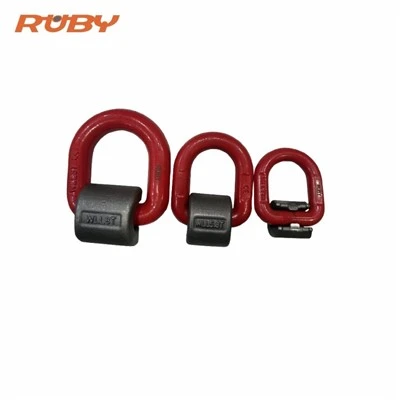
First off, we need to understand what a corrosive environment is. It’s basically any place where the air, water, or other substances can cause metal to break down over time. This could be a coastal area with salty air, a chemical plant, or even a swimming pool. In these environments, choosing the wrong material for your lifting point can lead to serious problems, like rust, pitting, and even failure.
Stainless Steel
One of the most popular materials for lifting points in corrosive environments is stainless steel. Stainless steel is an alloy that contains chromium, which forms a thin, protective layer on the surface of the metal. This layer helps prevent corrosion and makes the steel more resistant to rust.
There are different grades of stainless steel, and the choice depends on the level of corrosion resistance you need. For example, 304 stainless steel is a common choice for general-purpose applications. It’s relatively affordable and offers good corrosion resistance in most environments. However, if you’re dealing with a more aggressive corrosive environment, like a marine or chemical setting, you might want to go for 316 stainless steel. This grade contains molybdenum, which gives it even better resistance to pitting and crevice corrosion.
I’ve seen a lot of customers using stainless steel lifting points in their projects, and they’ve generally been very happy with the results. Stainless steel is not only durable but also looks good, which is a plus in some applications.
Galvanized Steel
Another option is galvanized steel. Galvanizing is a process where a layer of zinc is applied to the surface of the steel. The zinc acts as a sacrificial anode, which means it corrodes first, protecting the underlying steel.
Galvanized steel is a cost-effective solution for many corrosive environments. It’s commonly used in outdoor applications, like construction sites and agricultural settings. The zinc coating provides a good level of protection against rust and corrosion, but it may not be as effective as stainless steel in extremely harsh environments.
One thing to keep in mind with galvanized steel is that the zinc coating can wear off over time, especially if the lifting point is subjected to a lot of abrasion. So, you might need to re-galvanize the lifting point periodically to maintain its corrosion resistance.
Aluminum
Aluminum is also a viable option for lifting points in corrosive environments. Aluminum has a natural oxide layer on its surface, which helps protect it from corrosion. It’s lightweight, which can be an advantage in some applications, and it’s also relatively easy to work with.
However, aluminum has some limitations. It’s not as strong as steel, so it may not be suitable for heavy-duty lifting applications. Also, aluminum can react with certain chemicals, so you need to make sure it’s compatible with the environment it will be used in.
I’ve had customers use aluminum lifting points in applications where weight is a concern, like in the aerospace industry. They’ve found that aluminum works well as long as the lifting requirements are not too extreme.
Titanium
Titanium is a high-performance material that offers excellent corrosion resistance. It’s strong, lightweight, and has a very high strength-to-weight ratio. Titanium is often used in applications where corrosion resistance is critical, like in the medical and aerospace industries.
The downside of titanium is that it’s expensive. It’s not a cost-effective option for most general-purpose applications. But if you’re working on a project where the lifting point needs to withstand a very harsh corrosive environment and you have the budget for it, titanium could be a great choice.
Other Factors to Consider
When choosing the material for a lifting point in a corrosive environment, it’s not just about the corrosion resistance. You also need to consider other factors, like the load capacity, the size and shape of the lifting point, and the installation requirements.
For example, if you’re lifting a heavy load, you’ll need a lifting point with a high load capacity. Stainless steel and steel lifting points generally have higher load capacities than aluminum or titanium lifting points.
The size and shape of the lifting point are also important. You need to make sure it fits the application and can be easily installed. Some lifting points are designed for specific types of equipment or structures, so you need to choose the right one for your project.
Installation requirements can vary depending on the material. For example, stainless steel lifting points may require special welding techniques, while aluminum lifting points can be installed using simpler methods.
Conclusion
So, there you have it. The best material for a lifting point in a corrosive environment depends on a variety of factors, including the level of corrosion resistance you need, the load capacity, the size and shape of the lifting point, and the installation requirements.
Stainless steel is a popular choice for its good corrosion resistance and strength. Galvanized steel is a cost-effective option for many applications. Aluminum is lightweight and easy to work with, but it has some limitations. Titanium offers excellent corrosion resistance but is expensive.
If you’re in the market for a lifting point for a corrosive environment, I’d be happy to help you choose the right material for your project. Just reach out to me, and we can discuss your specific needs and requirements. I’ve got a wide range of lifting points in different materials and sizes, and I’m confident I can find the perfect solution for you.
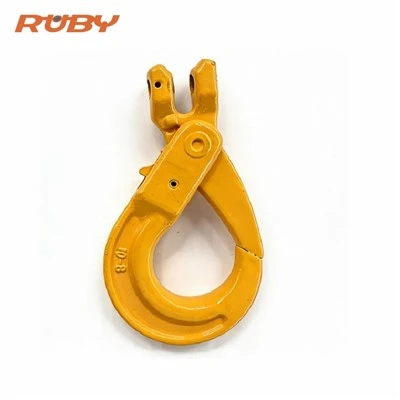
Let’s talk and see how we can work together to get you the best lifting points for your corrosive environment.
Weldable Lifting Lugs References
- ASM Handbook Volume 13A: Corrosion: Fundamentals, Testing, and Protection
- ASTM Standards for Corrosion-Resistant Metals
Hangzhou Ruby Imp. & Exp. Co., Ltd.
As one of the most experienced lifting point manufacturers and suppliers in China, we offer a wide range of products with superior quality. We warmly welcome you to wholesale custom made lifting point at competitive price from our factory.
Address: Taoyuan Industrial Park, Puyang Town, Xiaoshan, Hangzhou, Zhejiang, China.
E-mail: Sales5@z2lifting.com
WebSite: https://www.rubylifting.com/
